Migos AI Song and Video
A Migos AI song is not a filter. It is four decisions repeated for a decade: group staging, matching fits, a slow push-in and triplet flow. All four are presets here.
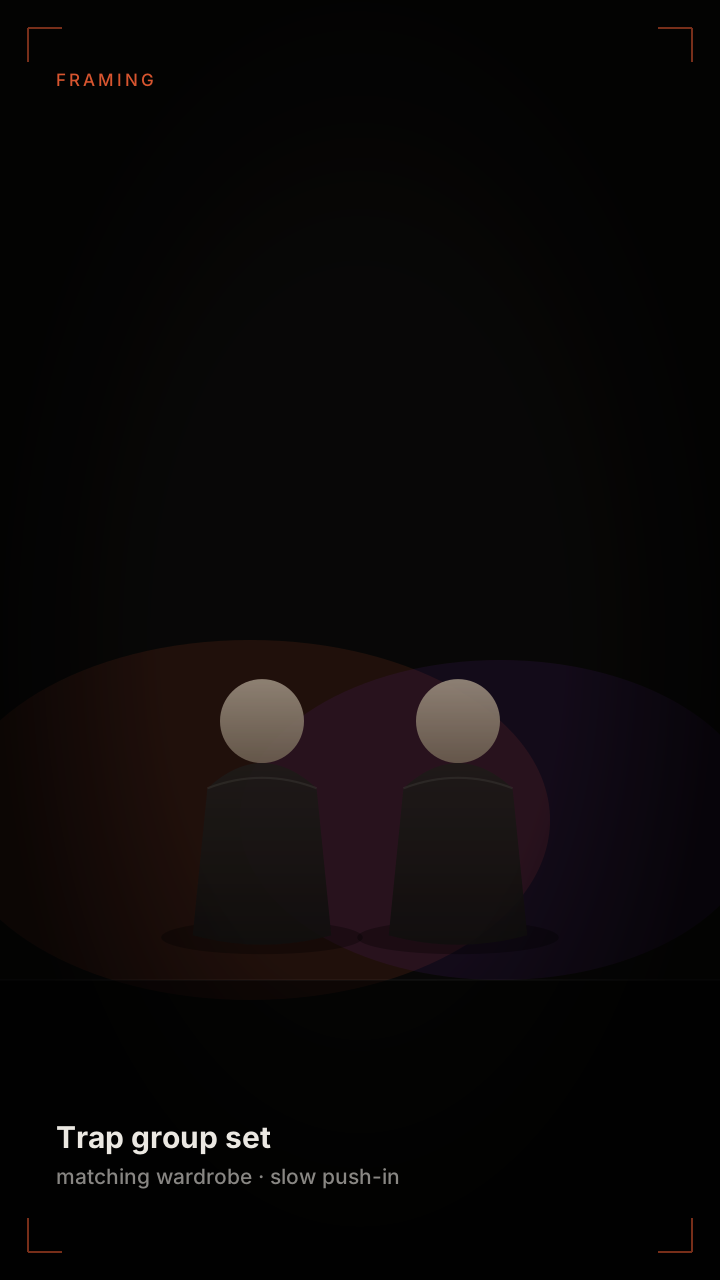 Group set
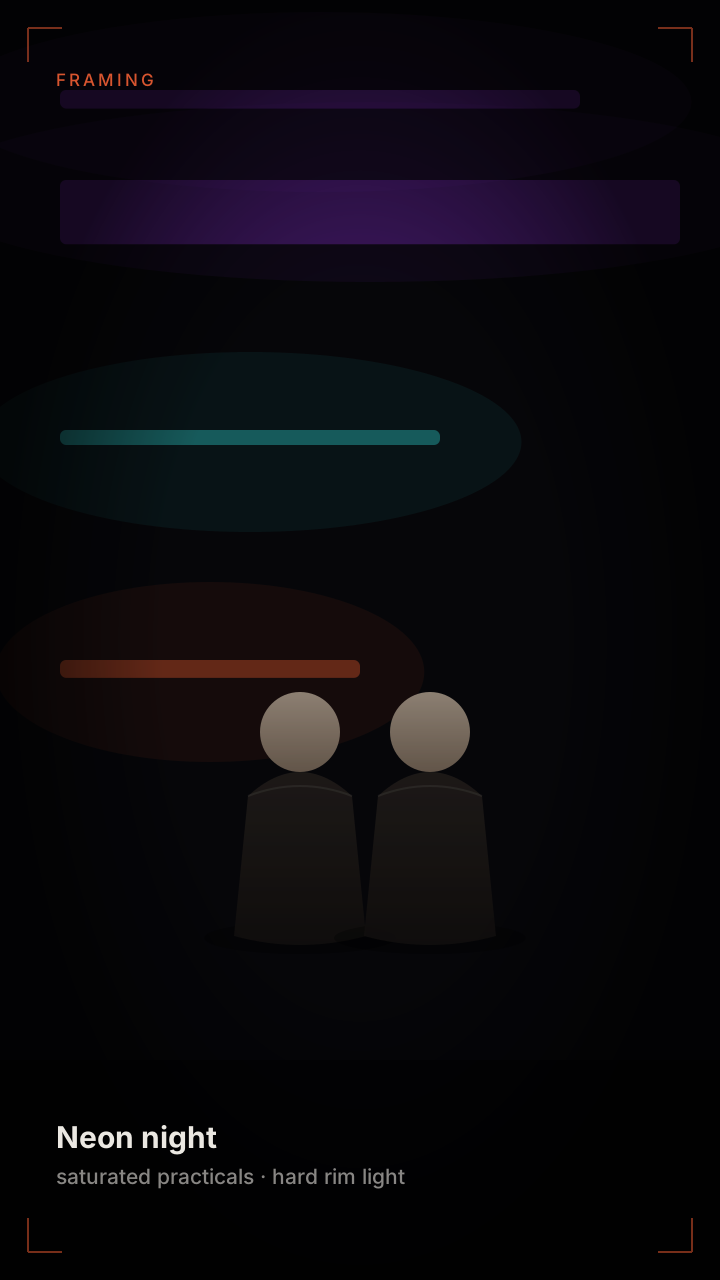 Neon grade
 Triplet flow
The Visual Grammar of a Migos AI Song
The Migos-era look is often described as expensive, which is misleading. What actually makes it recognisable is consistency: the same four choices in every shot, held for the whole video. You can reproduce the look with two people in a rented room if you hold those four choices, and you can fail to reproduce it with a full crew if you break them.
- Group framing — the camera holds two or three subjects on the same focal plane, never isolating one for long. The group is the subject, not any individual in it.
- Matching wardrobe — coordinated, not identical. Same palette, same silhouette, different pieces. This is the single highest-impact detail and the easiest to get wrong.
- One slow push-in — the camera moves toward the group at a constant, almost imperceptible rate. No handheld, no whip pans, no crash zooms.
- Low-key light with a hard rim — key from the side, rim from behind, background a stop darker than the subjects. The group reads as a silhouette with faces, which is why the wardrobe colour still registers.
The Flow: Triplets and Ad-Libs
The vocal signature of the era is the triplet: three syllables fitted to one beat instead of the two a straight flow would use. It sounds faster than it is, which is why imitations usually overshoot the tempo and end up sounding rushed rather than relaxed.
Writing for it is mechanical once you see the grid. Take a line and count it in threes: "hit the lot, then I dip, then I call" is three groups of three, landing cleanly on four beats. A line that runs to twelve syllables but groups as 4+4+4 will not swing the same way, even though the total is identical. The generator shows the grouping, so you can see whether a rewritten line still sits in the pocket.
Ad-libs do more work than they get credit for. A single repeated word between bars is what makes a two-voice track sound like a group instead of two people taking turns. Put the ad-lib in the gap after the fourth bar, and let the second voice carry it — that is what creates the sense of a crew rather than a duet.
Building the Clip
- 01
Upload one photo per person
Two photos is the minimum for group staging. Three works if you want the wider formation, but every extra face is another identity the model has to hold stable through the push-in, so start with two.
- 02
Choose the group preset
It sets the focal plane, the wardrobe palette and the push-in speed. Wardrobe is generated from the photos’ own colours, so a dark photo and a light photo will produce a mismatched pair — retry with two photos of similar tonality.
- 03
Write or generate the verse
Triplet-friendly lines, twelve syllables per bar, ad-libs in the gaps. The song generator returns the bar structure; paste it in and the cuts land on the same grid.
- 04
Render and grade
Export the clip, then apply a single colour grade across the whole piece. Consistency is the whole aesthetic — a clip that changes look between shots stops reading as the era immediately.
Style, Not Impersonation
A style reference is a set of visual and rhythmic choices. Impersonation is a claim about identity. The line between them is not subtle: matching a group’s framing and flow is a style reference; putting someone’s actual face on a real artist’s body, or releasing a track as if a real group made it, is impersonation and is not allowed here.
In practice this means the tool will build the look from your own photos and your own lyrics. It will not accept photos of the artists themselves, and uploads of public figures are rejected before the render runs. The output is a clip in a style, made with people who agreed to be in it.
This site is not affiliated with, endorsed by or connected to Migos, any of its members, or any record label. The name is used to describe a visual and musical style, the same way "boom bap" or "drill" describes one.
FAQ
Questions people ask before uploading
Is this affiliated with Migos?+
No. The preset reproduces a visual and rhythmic style — group staging, matching wardrobe, triplet flow. There is no affiliation with the group, its members or any label, and photos of the artists are rejected.
Can I put a real artist’s face on my video?+
No. Public figures and celebrities are blocked at upload, and the account is closed if it is attempted repeatedly. Style references are fine; putting a real person into content they did not agree to is not.
How many people can be in the clip?+
Two is the reliable case. Three works with a wider formation and good source photos. Beyond three, faces start losing definition during the push-in, because each one gets fewer pixels as the frame widens.
Does it write the triplet flow automatically?+
Yes. The song generator can write to a triplet grid and marks the syllable grouping per bar, so you can see whether a line sits in the pocket before you render the video.
What makes a Migos-style clip fail?+
Mismatched wardrobe and inconsistent grading, in that order. The look depends on the group reading as one unit; two people in clashing palettes read as two separate videos stitched together, no matter how good the framing is.
Related pages
Keep reading
Hold four choices, get the look
Group framing, matching palette, one push-in, triplet flow. Two photos is all the casting you need.
Make a Migos-style clipai-rap-duo.com